
Leave room for curiosity.
The most useful question in the room might be the one nobody planned to ask.
NOTE_001 READ THE NOTE ↗A HUMAN, NOT AN ENDPOINT.
Engineer by training.
Curious by default.
Exploring the space between people, technology,
and “what if?”

Louis Maresca
Kid-hearted curiosity. Engineering degrees as enablers.
01 / OUT IN THE WORLD
Talks, meetups, and conversations that keep the curiosity going.
Joining the conversation on . The recording will be linked after publication. Until then, explore the latest episode in the podcast section.
02 / FROM THE NOTEBOOK
Notes on making things, figuring things out, and staying a beginner.
The most useful question in the room might be the one nobody planned to ask.
NOTE_001 READ THE NOTE ↗Before adding another tool, give your agent a clearer picture of the place it is working.
NOTE_002 READ THE NOTE ↗Better tools are wonderful. A room full of generous people is still hard to beat.
NOTE_003 READ THE NOTE ↗03 / ON THE OTHER SIDE OF THE MIC
From the enterprise trenches to the next chapter of intelligent machines.

INTELLIGENT MACHINES / LATEST PUBLISHED
· Episode 892
GitHub's agent revolution, with guest Martin Woodward. The latest published episode while my appearance is still ahead.
Watch or listen on TWiT ↗NEXT UP → I'll join episode 893 on . The recording link will follow publication.
TWiET / THE 2023 ARCHIVE
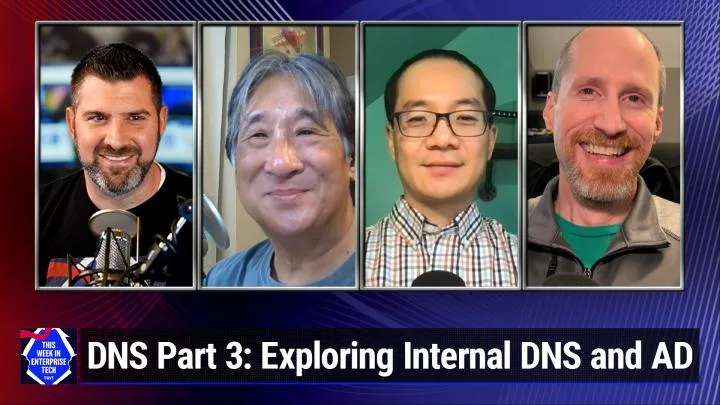
TWiET 573 / CO-HOST
Internal DNS, hybrid-work security, and a farewell to the TWiET community.
Watch / listen ↗Opens on TWiT in a new tab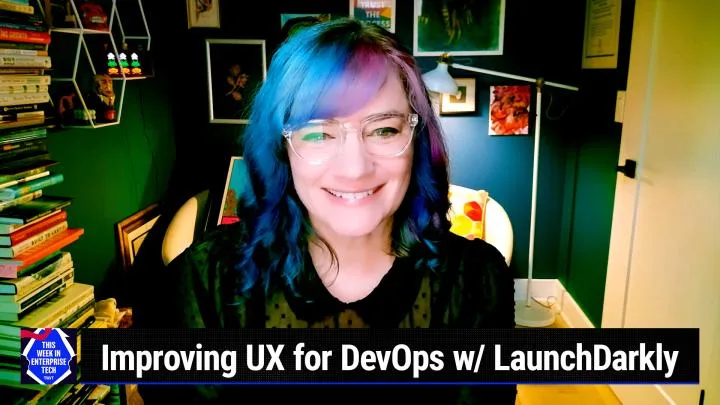
TWiET 570 / CO-HOST
Better developer experiences, useful friction, and a conversation with LaunchDarkly.
Watch / listen ↗Opens on TWiT in a new tab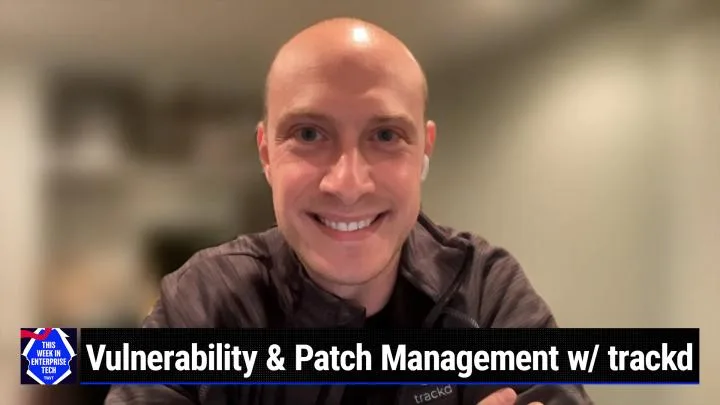
TWiET 569 / CO-HOST
Closing security skills gaps and making patch management less disruptive.
Watch / listen ↗Opens on TWiT in a new tab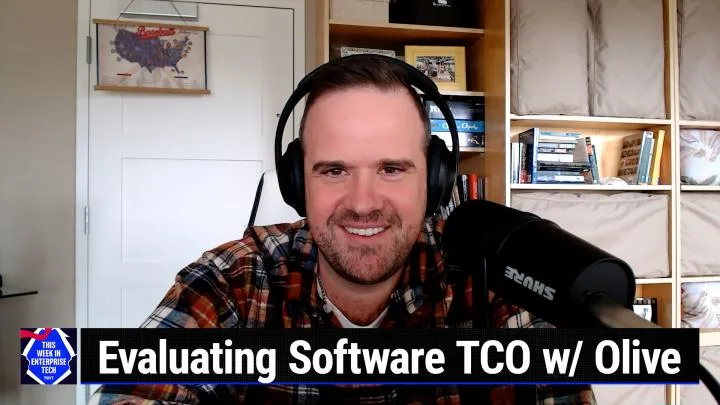
TWiET 568 / CO-HOST
The AI executive order, software ownership costs, and choosing tools with intention.
Watch / listen ↗Opens on TWiT in a new tabThese are my four most recent TWiET host credits, verified against TWiT's archive. Original publication dates are preserved.
04 / THE INTERNET IS STILL INTERESTING
A small collection of rabbit holes. Bring your curiosity.
 Interactive
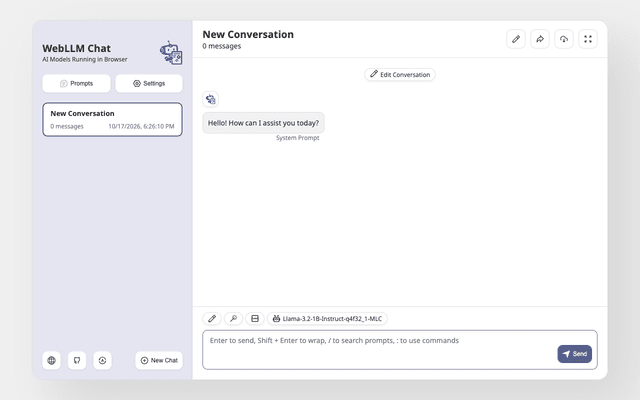
WebLLM
A hands-on look at local language models. No server required for inference.
Opens in a new tab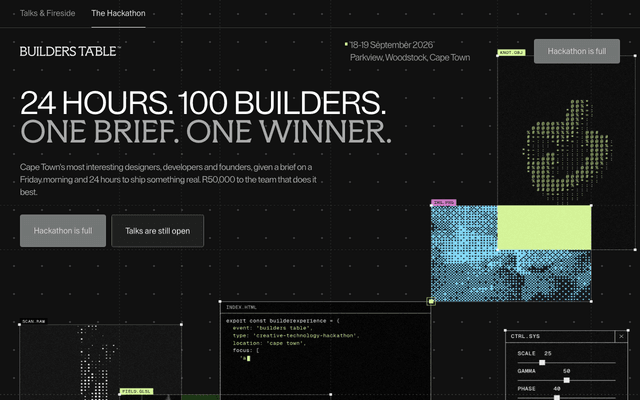 Design
Builders Table
Stippled portraits, quiet motion, and a beautifully playful collage of ideas.
Opens in a new tab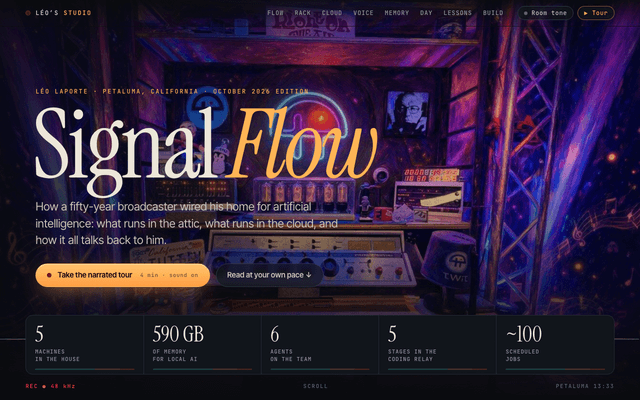 Worth a read
Léo's studio
A thoughtful tour of the machines, models, and memory behind a personal AI setup.
Opens in a new tab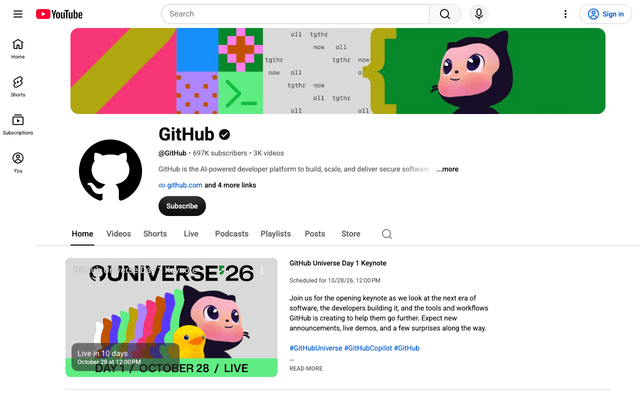 Video channel
GitHub
Developer stories, practical demos, and conversations from the wider builder community.
Opens in a new tabCOLLECTED, NOT ALGORITHMICALLY SERVED.A CONTINUOUS THREAD. DRAG TO EXPLORE →
05 / A DIFFERENT KIND OF HELLO
Meet LouBot. A small, browser-local experiment in making the internet more personal.
Your browser.
Your conversation.
No server in the middle.
AI is optional. Explore the site without downloading a thing.
06 / SHOW YOUR WORK
Not magic. Not a black box. Just a few small steps, made visible.
How a small agent-assisted task might unfold. Prerecorded-style examples, not real command execution. No shell, files, or processes are accessed.
A small request. A bounded plan. A change you can inspect.
Waiting for the visual terminal.Make a small feature. Step 1: Understand the request. Paused.
Choose a script: demo feature, demo review, or demo ship.
Understand the request
$ agent "add a reading-time label"
Read the article template and content schema.
Keep the change local. No new dependencies.
Plan: count words, round up, show the label.

Make one focused change
$ agent apply --scope reading-time
+ readingMinutes = max(1, ceil(words / 220))
+ Add a quiet label below the article title.
Leave the article content and layout alone.

Verify the edges
$ npm test -- reading-time
Example result: empty article -> 1 min
Example result: 221 words -> 2 min
Review the diff. A human decides what ships.
Tools do the repetition. People make the calls.
A little order. A little noise.
An original, living character field.
Original browser artwork · Ink-rendered · 8 fps maximum
These are illustrative, prerecorded-style sequences. No commands execute, no files change, and nothing deploys. Read every step here—with or without JavaScript.
A small request. A bounded plan. A change you can inspect.
Understand the request
$ agent "add a reading-time label"
Read the article template and content schema.
Keep the change local. No new dependencies.
Plan: count words, round up, show the label.

Make one focused change
$ agent apply --scope reading-time
+ readingMinutes = max(1, ceil(words / 220))
+ Add a quiet label below the article title.
Leave the article content and layout alone.

Verify the edges
$ npm test -- reading-time
Example result: empty article -> 1 min
Example result: 221 words -> 2 min
Review the diff. A human decides what ships.
Read the intent, challenge the edges, keep the human in the loop.
Read the scope
$ git diff --stat
Example diff: 2 files, one form validation.
Question: does the fix preserve valid input?
Read the patch before trusting the summary.

Challenge the happy path
$ agent review --focus edge-cases
Check empty input and whitespace-only input.
Finding: trim before checking the length.
Request a focused regression test.

Make the decision
$ npm test -- form-validation
Example result: valid input still accepted.
Example result: blank input gets a hint.
Suggested outcome: ready for human review.
Check the build, inspect the output, publish with intention.
Check before building
$ npm run check && npm test
Example checks: types, links, focused tests.
No server or secret belongs in the browser.
Confirm the page still reads without JS.

Inspect the static output
$ npm run build
Example output: HTML, CSS, lazy JS assets.
Preview small screens and keyboard paths.
Check reduced motion and loading states.

Publish deliberately
$ agent summarize --release
Write a short summary and rollback note.
A person approves the hosting deployment.
This demo publishes nothing. Your move.
07 / FIND YOUR PEOPLE
The best part of building?
The people you meet along the way.
For the makers, the question-askers, and the “let's try it” people. These are the spaces this corner of the internet is growing toward.
Experiment. Share. Build something useful.
Agent-curious? You're in good company.
A still orbit. Use the arrows to explore.